Impact Area II
Intersectional Climate Justice
Connecting Gender, Disability, and Human Rights to the Environment
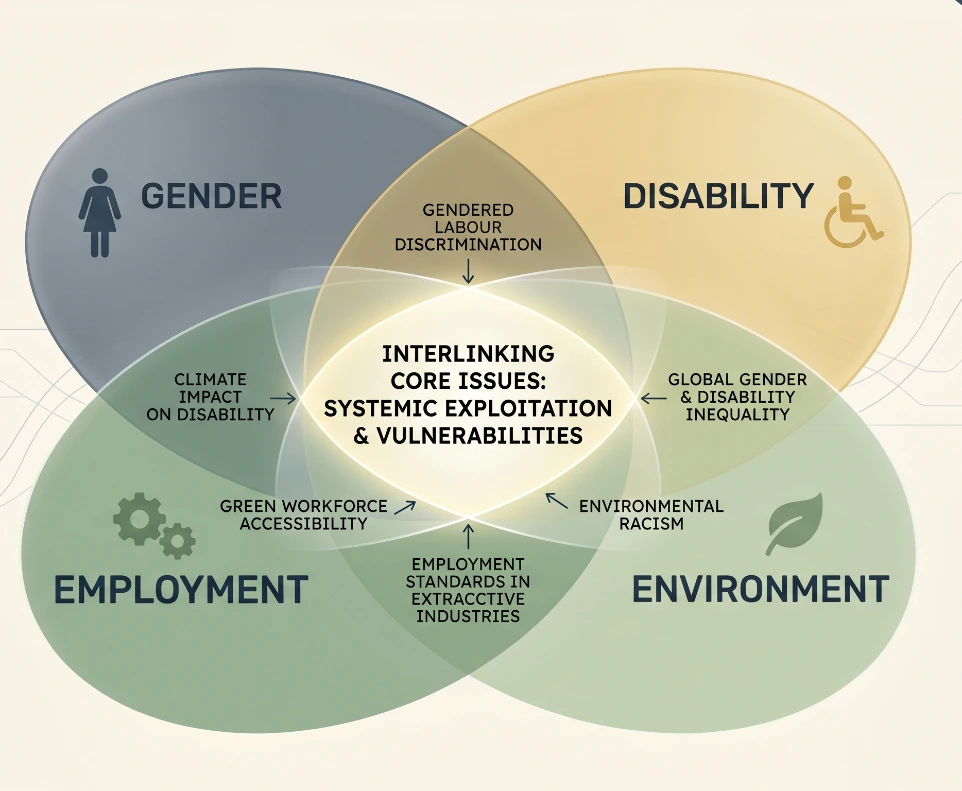
Climate change does not affect everyone equally. It acts as a threat multiplier, worsening the challenges already faced by vulnerable and marginalized populations. True climate justice cannot be achieved without addressing the deep interlinks between environmental health, gender equity, disability rights, and fundamental human rights. Gender inequality and climate change defy mono-causal explanations; they are fundamentally co-constituted by a complex range of socioeconomic and political factors. The gender and disability climate justice framework emphasizes that intersectionality must be central to policy responses, utilizing it as an indispensable analytical tool for constructing effective interventions.
Our initiatives amplify underrepresented voices. We support programs that increase equitable access to resources, shift unequal power dynamics, and ensure that women are recognized and supported as essential leaders in climate resilience and sustainability.
Confronting Eco-Ableism
Advancing Disability Justice
If the transition to a sustainable future is to be truly just, disability rights must be central to our planning, not an afterthought. We advocate fiercely for inclusive climate action. By listening to disabled communities and creating accessible resources, we ensure that our collective responses to climate breakdown value all bodies and minds.
Global Policy Frameworks
Local Action, Global Transformation. Heal Earth Alliance is a rooted in strong socio-environmental values. We know that grassroots community action is paramount. To ensure our work delivers measurable, equity-driven outcomes, our initiatives are closely aligned with key British socio-environmental priorities and the United Nations global frameworks.